Menu
PAH in systemic sclerosis
Systemic sclerosis (SSc) is an autoimmune connective tissue disease affecting multiple organs. PAH is a well-known cardiopulmonary complication of SSc.1 The estimated prevalence of SSc-PAH in Australia is 11.8%, making it the second most common type of PAH after the idiopathic form.1,2
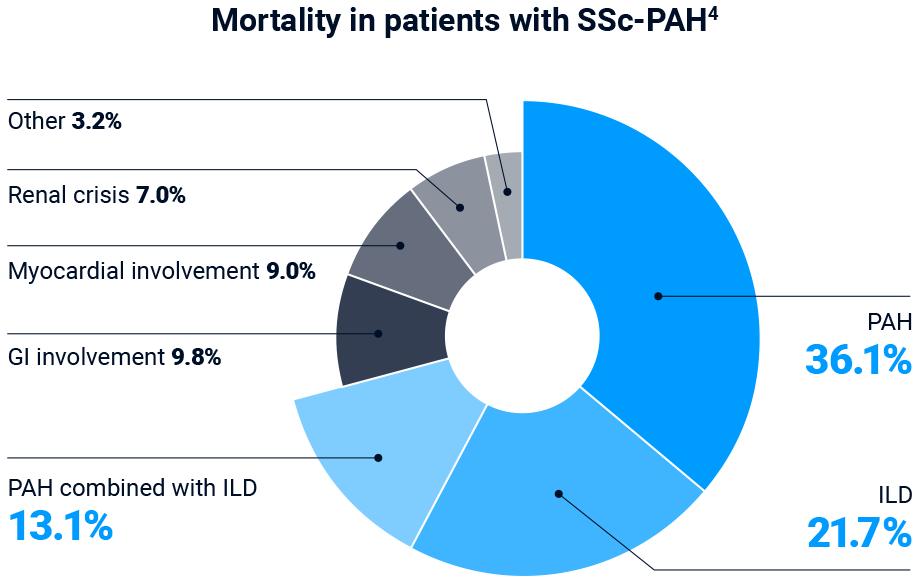
Adapted from Hao Y, et al. 2016.4
GI, gastrointestinal; ILD, interstitial lung disease.
About 1 in 10 patients with SSc will develop PAH during their lifetime.3
PAH is a leading cause of death in SSc, and mortality in these patients remains unacceptably high.4 Patients with SSc-PAH have poorer outcomes and almost 3 times higher mortality compared to patients with PAH from other causes.1
Early diagnosis of SSc-PAH is difficult, with patients usually presenting later, with severe functional and haemodynamic compromise.5 Therefore, close vigilance and regular screening are an essential cornerstone in the management of patients with SSc.1,5
“Patients with systemic sclerosis can deteriorate very quickly between annual visits, even if their initial presentation is relatively mild.”
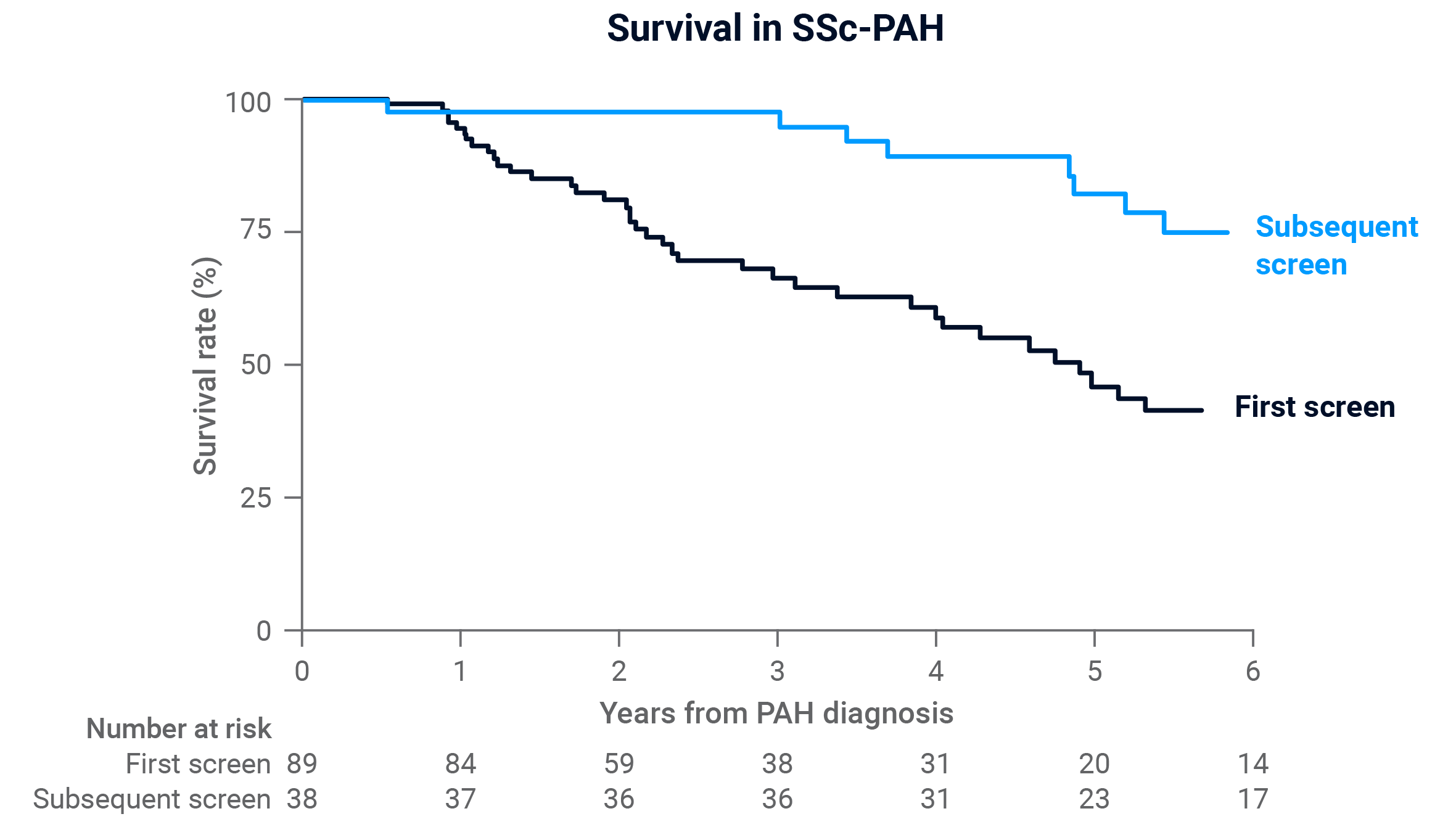
SSc screening programs can reduce mortality5
Screening in SSc populations enables earlier diagnosis of PAH, facilitating earlier intervention and improving long-term survival.5 Annual cardiopulmonary screening is recommended in all patients with SSc, in order to identify patients who should have a right heart catheterisation to diagnose potential PAH.2
Adapted from Morrisroe K, et al. 2017.2
Survival in incident SSc-PAH patients detected in routine clinical practice compared with those detected as part of a screening program5
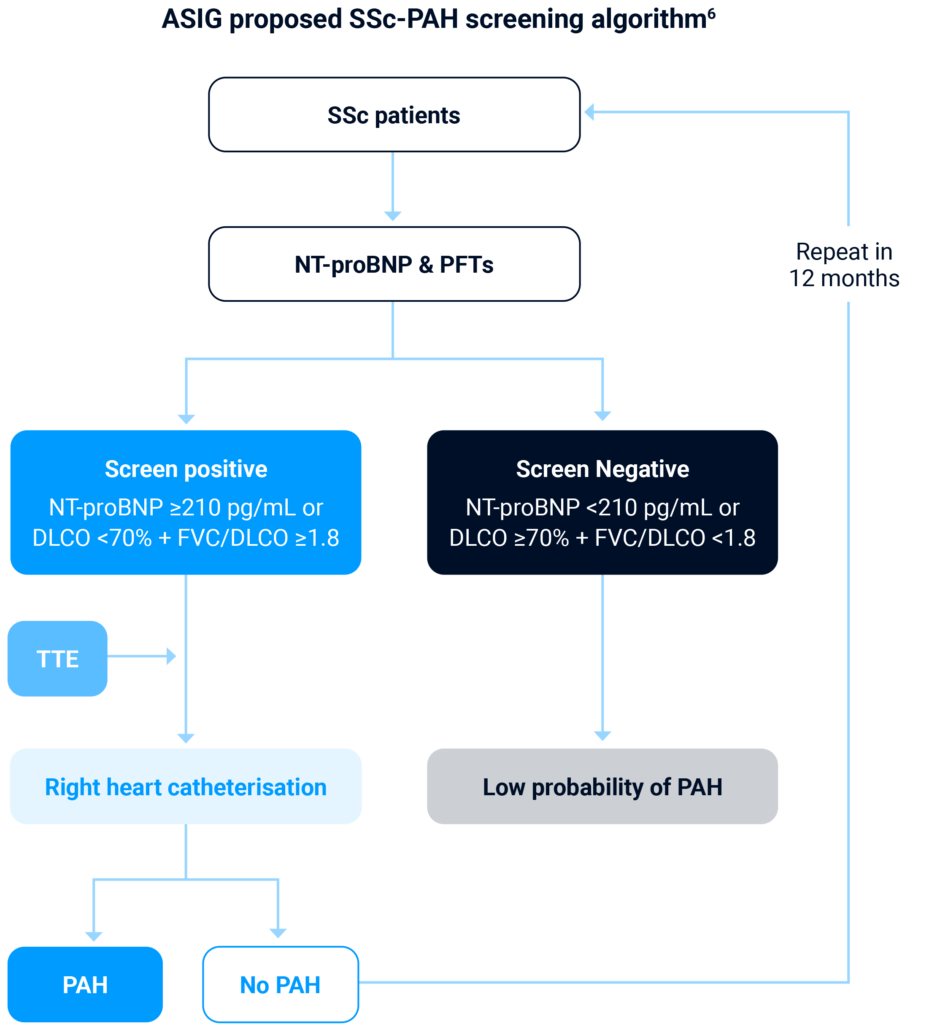
The Australian Scleroderma Interest Group (ASIG) has proposed the below algorithm for screening SSc patients for PAH.6 It utilises the biomarker NT-proBNP, which is an indicator of ventricular wall stress and is measured by a simple blood test.6 More information about the investigations needed to help identify PAH can be found here.